If you see any underlined keywords (as opposed to links that specifically mention another article of ours), the related links point to our IP Lingo dictionary.
Context: In July, Sony filed a complaint in the Northern District of California seeking a preliminary injunction (PI) against Tencent and some of its subsidiaries, alleging that the upcoming Light of Motiram game infringes on Sony’s copyrights and trademark rights in its Horizon series, particularly Horizon Zero Dawn (August 12, 2025 Bristows article).
What’s new: Late on Wednesday by local California time, three of the five Tencent companies Sony is suing brought a motion to dismiss the complaint, preferably in whole, otherwise in part. Tencent’s argument for dismissal has multiple layers discussed further below (lack of jurisdiction over Cayman Islands company, lack of specific per-company allegations, fundamental deficiencies of trademark-related allegations, premature nature as the accused game has not even been released). In support of its argument that Sony seeks to monopolize well-known game elements, Tencent additionally filed a request for judicial notice of comments made by gamers on Steam when they saw Sony’s Horizon for the first time and were reminded of Enslaved: Odyssey to the West and other games.
Direct impact:
- The hurdle for a complaint to survive a motion to dismiss is rather low, and in this case the issues that are raised by the motion would not have the potential to get Sony’s case thrown out immediately. However, there is a decent possibility that Sony will have to amend its complaint, at which point Tencent can bring a renewed motion to dismiss.
- The Steam comments that Tencent shows to the court are interesting and show to the judge that Sony’s request for an injunction is overreaching, but the decision will ultimately not be based on what gamers said about Horizon.
Wider ramifications: The rule of law must apply to the games industry and valid intellectual property rights must be universally respected, but we are watching with concern how “lawfare” is increasingly being used by game makers to stifle creativity and restrict competition (September 16, 2025 games fray article on Nintendo refusing to recognize mods as prior art, i.e., a source of inspiration for game designers; and May 11, 2025 games fray article on Pocketpair having removed a feature from Palworld that is already demoed in 2021, prior to a Nintendo patent application).
Here’s Tencent’s motion to dismiss, followed by further explanations:
Tencent’s portrayal of the overall situation
We must make a distinction between
- the parts of the motion that discuss specific reasons to dismiss Sony’s complaint (or parts thereof) and
- those parts that are just about showing to Magistrate Judge Joseph C. Spero and the court of public opinion (meaning all of us watching the case) that Sony is being unreasonable.
Obviously, a U.S. court is not bound by what gamers think. But Tencent couldn’t just let Sony’s accusations of plagiarism stand, so it points to Steam and GameFAQ comments that considered Sony’s Horizon almost a ripoff of Enslaved: Odyssey to the West:
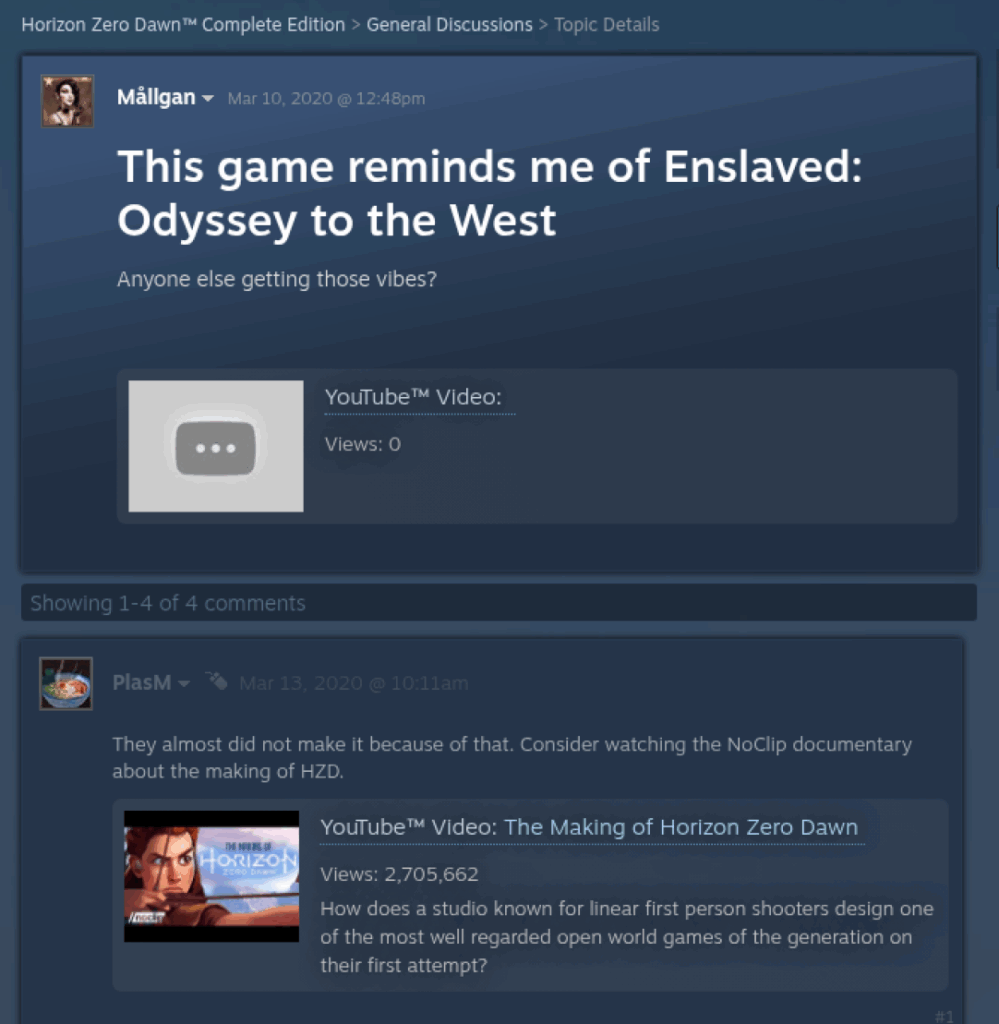
Other online comments drew analogies between Horizon Zero Dawn‘S Aloy character and Tomb Radar heroine Lara Croft, or mentioned Far Cry and Primal.
Tencent calls Sony’s lawsuit “an improper attempt to fence off a well-trodden corner of popular culture and declare it Sony’s exclusive domain,” which would be “an impermissible monopoly on genre conventions.”
Like the Steam comment above, Tencent points to the fact that Horizon Zero Dawn art director Jan-Bart Van Beek warned that Sony should not make a game that looks too much like Enslaved: Odyssey to the West. According to the motion, that project was shelved, only to be revived later.
Cayman Islands company
Tencent considers it a particularly clear case that Tencent Holdings LLC, a Cayman Islands company, should be dismissed from the case. Tencent says this is merely a holding company and Sony doesn’t make specific allegations to how it is involved with Light of Motiram. Moreover, Tencent faults Sony for not pleading that the Cayman Islands company has done anything in California that is relevant to this case.
Impermissible group pleading
Tencent furthermore says Sony must make specific allegations with respect to each Tencent entity it is suing as opposed to lumping them all together as “Tencent”. If the judge agrees, Sony will have to amend its complaint, but the question is to what extent Sony can actually find out at this stage what roles the various entities play. This could be a chicken-and-egg problem for Sony, but if so, it’s because they are seeking a PI before the game has even been released. When the game has been published, they will be in a better position to say what functions the various Tencent companies have in connection with Light of Motiram.
Failure to allege conduct giving rise to a copyright or trademark claim
In the first half of that part, Tencent maks a similar kind of argument as an impermissible group pleading: Sony’s complaint allegedly doesn’t make it clear what each of those Tencent companies did specifically.
The second part is only about the trademark (not copyright) part of the case. Here, Tencent raises what could be pretty strong defenses to Sony’s trademark claim, but at this point the court can’t resolve the whole case. It can throw out Sony’s complaint only if it’s clearly meritless. That means the court will have to let Sony litigate its trademark claims even if Judge Spero feels those claims are somewhat weak. Nevertheless, it’s worth looking at what Tencent says.
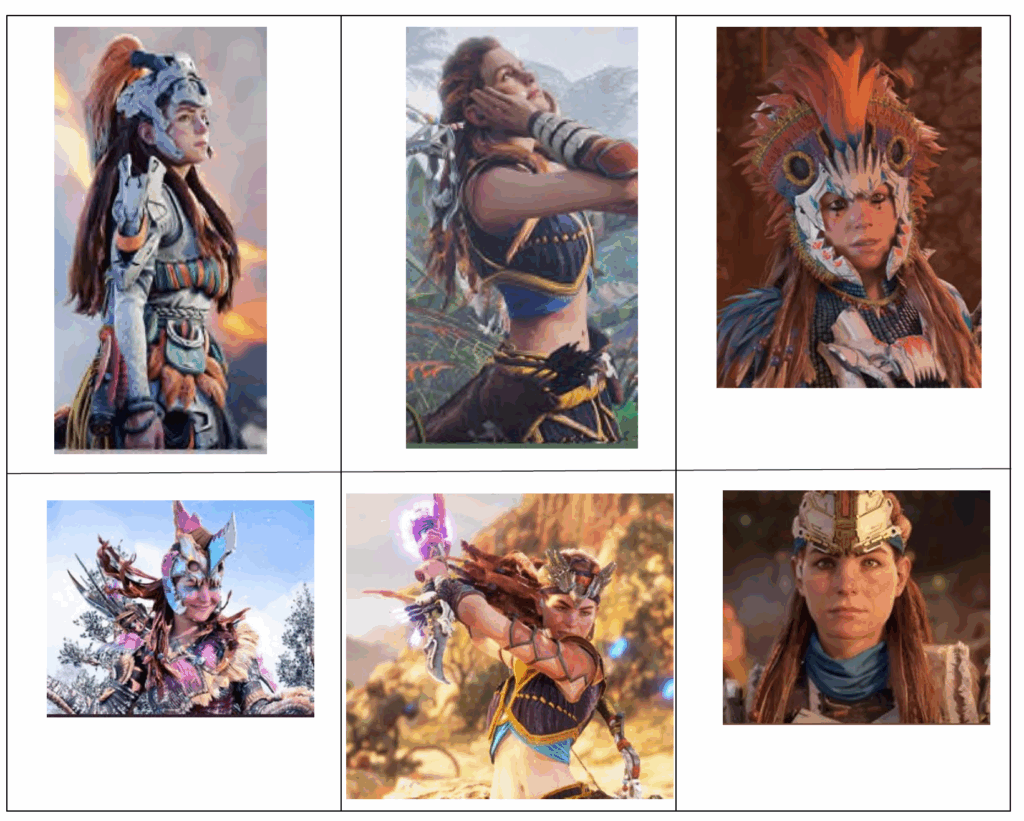
Simply put, Sony accuses Tencent of using an Aloy-like character. But in order for there to be a trademark infringement, Sony would have to convince the court of the Aloy character being a protectable mark and “a signifier of the Horizon franchise.”
Tencent says Sony’s complaint doesn’t even take a consistent position on Aloy’s visual appearance and shows six different Aloy images from Sony’s complaint:
Those images are indeed in the original complaint, just that Sony juxtaposes each image with a Light of Motiram image:
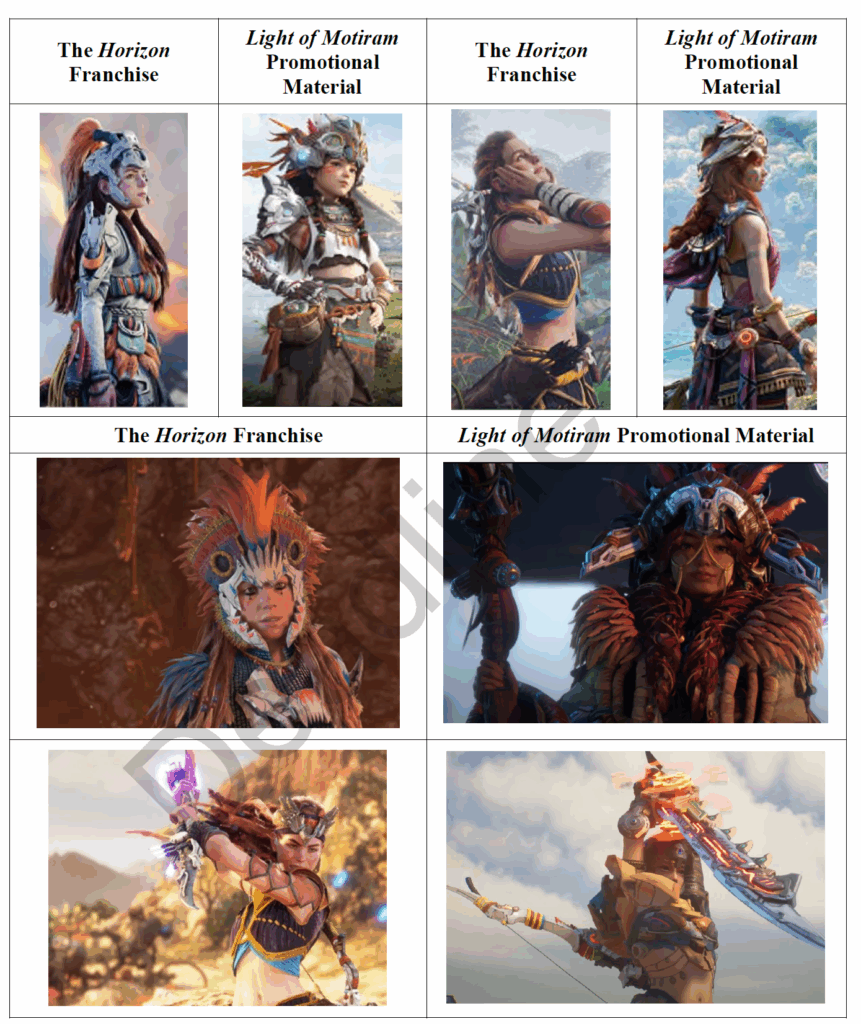
In other words, Tencent says Sony should identify a single Aloy look that has trademark status, as opposed to multiple different embodiments.
Sony’s claims are allegedly premature
Tencent argues that Sony’s complaint is not ripe for adjudication. It is (allegedly) “nothing more than speculation, based almost entirely on future conduct that has not—and may never—occur.”
That part obviously does not amount to saying that Tencent won’t release Light of Motiram, or that it won’t look like the pictures Sony has shown to the court. But at this stage, Tencent does not have to say “we won’t do that”: Sony is the one who’s suing, so Sony must bring actionable claims. Until that happens, Tencent doesn’t have to say anything about its future plans.
Tencent’s motion stresses that “Light of Motiram is not slated for release for
more than two years.” (emphasis in original)
Next steps
Sony now has to respond to Tencent’s motion to dismiss. It will defend the complaint in its current form. In the meantime, additional defendants from the Tencent group will be formally served. Technically, they would have to bring their own motions to dismiss at that point, but apart from the arguments that are specific to the Cayman Islands company, the present motion raises issues that apply to the other Tencent companies as well.
There is at least a 50% chance of Sony having to amend the complaint, but given the low legal hurdle at this early stage, it doesn’t look like this will be over anytime soon.