Words that are underlined link to explanations in our IP Lingo dictionary unless the underlined passages explicitly refer to other articles.
Context: Two weeks ago, Sony brought a motion for a preliminary injunction (PI) against Tencent’s upcoming Light of Motiram game and its pre-release promotion (October 17, 2025 games fray article) over copyrights and trademarks. At the time, Sony requested a PI hearing on November 20, 2025 (or as soon as possible thereafter), but Judge Jacqueline Scott Corley of the United States District Court for the Northern District of California, whose name many gamers have heard because of her FTC v. Microsoft-ActivisionBlizzard PI denial (affirmed by the appeals court: May 7, 2025 games fray article), could not make time available before December 4, 2025.
What’s new:
- For two reasons, Sony and Tencent have agreed that the PI hearing be pushed back into next year, with January 15, 2026 being the new proposal, subject to Judge Corley’s availability:
- a scheduling conflict: Sony’s lead counsel, Orrick’s Annette Hurst (web profile) will represent Microsoft against The New York Times Company in a discovery hearing related to their AI copyright dispute on the same day (ai fray is covering multiple AI copyright cases including that New York set of cases: October 29, 2025 ai fray article), and
- Tencent’s request to have more than the usual two weeks to respond to the PI motion,
the parties .
- On Wednesday (October 29, 2025), Tencent filed its reply brief in support of its motion to dismiss (MTD) Sony’s complaint (we discussed the MTD in a September 18, 2025 games fray article). The MTD track is separate from the PI briefings, except that to the extent the MTD succeeds, there would be no room for a PI relating to any dismissed claims or parties. Tencent reinforces its original arguments. With a view to whether the tribal huntress character named Aloy from Horizon Zero Dawn has trademark status despite its changing appearance, Tencent points to the fact that Disney has filed for multiple different Mickey Mouse trademarks as opposed to relying on just a single one.
Direct impact:
- Any PI hearing date after December 4 would probably not have been soon enough, given how busy the court is, to get a decision before the end of the year. At this stage, a PI would merely impact pre-release promotions of the game, but the actual release is still about two years away.
- Tencent’s reply brief the MTD is well-crafted, but doesn’t really reinforce the arguments previously raised. Instead, some of Sony’s strongest opposition arguments, such as with respect to Tencent Holdings itself once having claimed in a case in the same U.S. district court that it has a Palo Alto office (October 16, 2025 games fray article), have not been countered (or at least not effectively). The trademark character of Aloy and the urgency of a PI against an unreleased game remain somewhat interesting questions, but the focus at the postponed hearing will be on the PI motion, with the MTD being of limited relevance at this stage. The reference to a multiplicity of Mickey Mouse trademark registrations is interesting, but not a very strong argument as discussed further below.
Wider ramifications: This case continues to be an interesting one about striking a balance between a reasonable degree of protection of IP and room for incremental innovation and creativity. Unlike in connection with Nintendo v. Pocketpair (October 29, 2025 games fray article), where the vast majority of gamers (basically all but a few die-hard Nintendo fans who may not understand what an all-out patent war would mean for the games industy) are unconvinced of there being an infringement, the public debate reflects more gamers’ sympathy for Sony’s course of action than for Nintendo’s, though there are also many voices that warn against Sony v. Tencent having the potential to stifle creativity. One difference is, of course, that Sony cannot be accused of bullying a smaller company in this case.
Proposal to modify the PI schedule
Judge Corley is not going to have a problem with the proposal that Tencent have until December 3, 2025 to file their opposition to Sony’s PI motion. The 16 days that Sony would like to have subsequently to file its reply brief (proposed deadline: December 19, 2025) and the postponement of the hearing will almost certainly be rubberstamped, too. However, whether Judge Corley is available for a January 15 hearing remains to be seen. It could be a slightly later date.
Sony’s lead counsel’s unavailability is beyond reasonable doubt. First, Sony has no interest in delay. Second, on August 15, 2025, already entered an order scheduling a New York Times v. Microsoft & OpenAI discovery hearing for December 4, 2025:
Discovery Hearing set for 12/4/2025 at 09:30 AM in Courtroom 20D, 500 Pearl Street, New York, NY 10007 before Magistrate Judge Ona T. Wang.
Lead counsel doesn’t always attend discovery hearings personally, but in those AI copyright cases there are serious discovery disputes and it is a major case in which the New York Times is seeking billions of dollars from Ms. Hurst’s client.
Sony just had to avoid creating the impression that the case was not truly as urgent as it claims. But given the complexity of the case and what’s at stake, it would have been difficult for Sony to successfully oppose a request by Tencent for an extended response deadline. Therefore, Sony is not being inconsistent.
Multiplicity of Mickey Mouse trademarks
In its reply brief in support of its MTD, Tencent stands by its previous positions, but it is hard to see how the MTD would convince Judge Corley in every respect. It appears that Tencent would actually be glad to create a situation where Sony will, at best, obtain a PI against pre-release promotions of Light of Motiram that have specific elements (meaning the game could still be promoted, but with other artwork) and not against the release of the game itself. It’s not impossible to obtain a PI against an unreleased product, but Sony might have to try again later. Procedurally, even an injunction against the release of the game would not declare Light of Motiram illegal no matter in what shape or form it is launched. But there is always room for interpretation of such injunctions. It would not be surprising if Judge Corley declined to enter a PI against the game itself at this stage, and a dismissal of the part of the complaint that targets the game would be a procedural possibility. She might also deny the MTD as well as the PI motion, an outcome that Tencent could definiely live with.
We have previously voiced concern over whether the tribal huntress character in Light of Motiram constitutes trademark infringement in terms of confusing consumers about the origin of the product. Tencent stresses that point again: a game character can be famous, but that doesn’t mean it’s viewed by the market as something that identifies a source. It will be an uphill battle for Sony to prevail on that claim, but it’s much easier to defend a claim, even a difficult one to prevail on, against an MTD.
Tencent argues that Sony’s Aloy character isn’t a trademark because, by virtue of being a video game character, its appearance (such as its apparel) changes all the time. Tencent furthermore says that Sony’s allegations actually are very much about those changing elements.
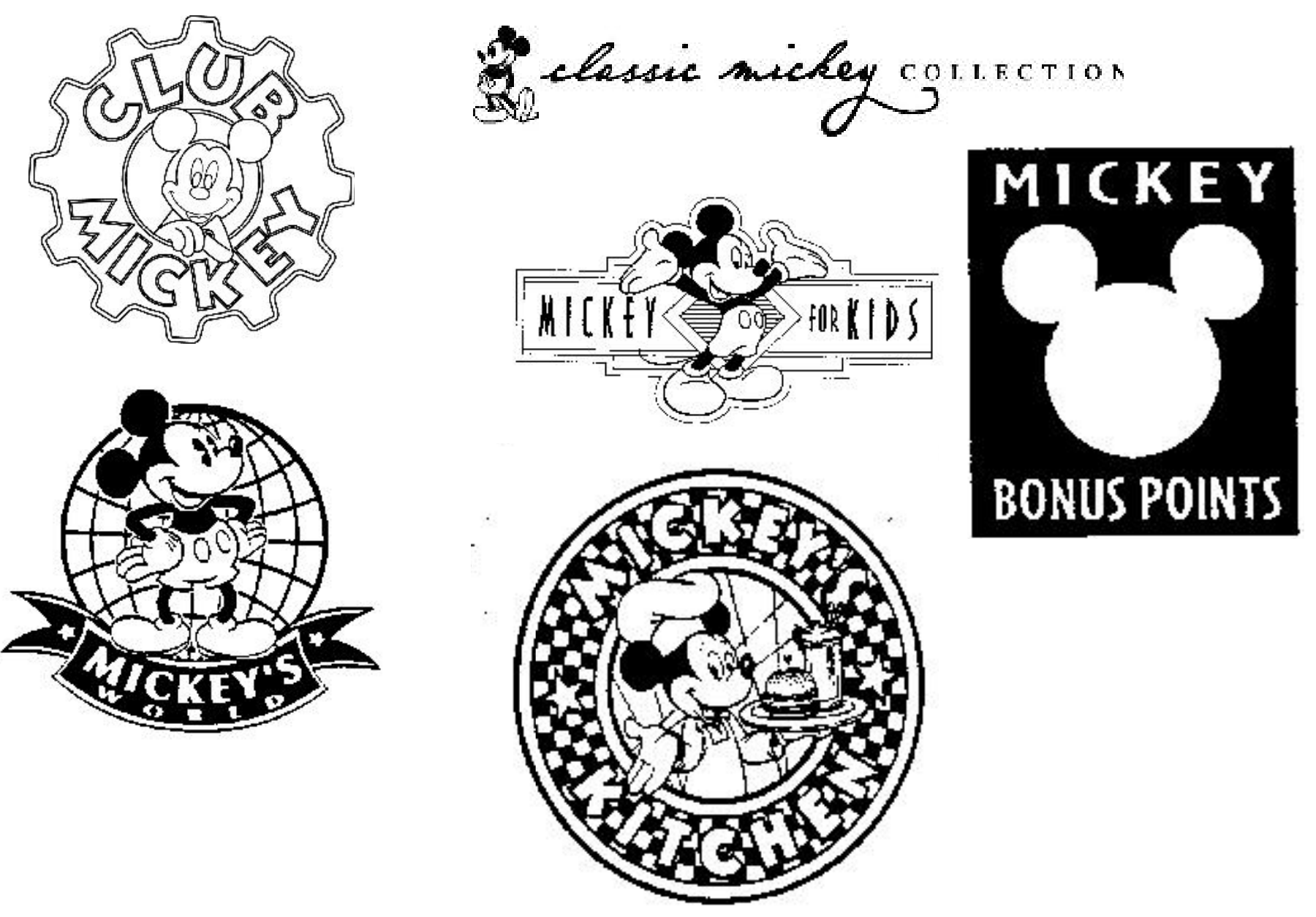
In an effort to underpin its argument that a trademark-like character can’t cover different appearances, Tencent points to half a dozen different Mickey Mouse trademark registrations by The Walt Disney Company:
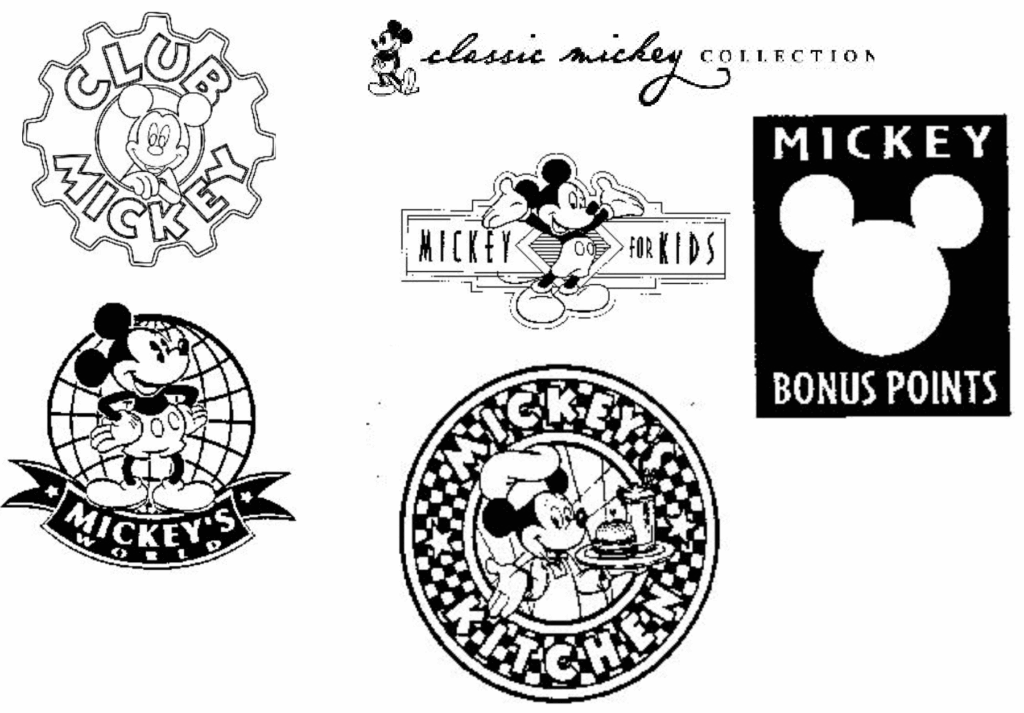
Tencent says that disney wouldn’t have filed for multiple Mickey Mouse appearances if it wasn’t necessary to protect them separately.
That argument is weak, however, for two reasons:
- The purpose of those registrations of additional graphic marks was presumably to prevent others from using marks without Mickey, such as a “Club Charly” with a bear instead of a mouse. The bonus points mark is a special case because of its extremely high level of abstraction.
- Those Disney trademark registrations relate to different product categories. By contrast, Mickey Mouse itelf is such a famous mark that it is not specific to any category. Aloy is obviously nowhere near as famous as Mickey Mouse.
Therefore, the more interesting argument raised by Tencent is whether Sony’s trademark infringement allegations relate to variable elements as opposed to Aloy’s visual characteristics that would be found in each and every context and manifestation.
Finally, here’s Tencent’s reply brief: